

What to Expect at an Order of Protection Hearing
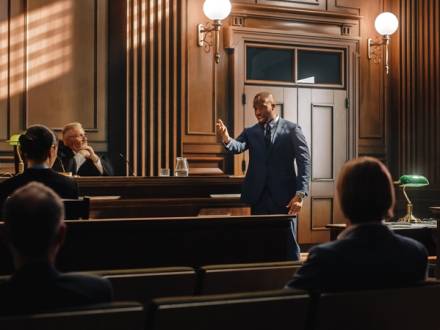
At an Illinois order of protection hearing, a judge listens to both sides and decides whether legal protection is necessary. You can present evidence, question witnesses, and respond to the accusations against you. The judge’s decision can affect where you live, whether you can contact family members, and your access to firearms. If you have been served with court papers in 2026, our Lake County, IL criminal defense lawyer can help you understand the process and prepare your response.
What Types of Orders of Protection Does Illinois Have?
Illinois has three main types of orders of protection. An emergency order can be issued without notifying you first when the legal requirements are met. It often lasts 14 to 21 days. You must follow its terms even before the court holds a full hearing.
An interim order can last up to 30 days while the case moves forward. A plenary order is issued after proper notice and a finding that the legal requirements are met. It usually lasts up to two years, but some related cases have different rules. Plenary orders can also be extended.
Read the papers you received carefully. They should identify the order, the restrictions, and your next court date. If you fail to appear after proper notice, the judge may enter a plenary order without hearing your side.
What Does the Petitioner Have to Prove to Get an Order of Protection Against You?
Under 750 ILCS 60/214, the petitioner must show abuse involving a qualifying family or household relationship. This includes spouses, former partners, people who share a child, and certain relatives or household members. Physical injuries are not required in every case.
Abuse can also include harassment, intimidation of a dependent, or interference with personal freedom. Repeated unwanted calls or following someone may qualify as harassment. The petitioner must prove the claim by a "preponderance of the evidence." This means the judge must find that abuse is more likely to have happened than not. The standard is lower than the proof required for a criminal conviction.
What Actually Happens During an Order of Protection Hearing?
The petitioner presents evidence first, including testimony, witnesses, and documents. Your attorney can question witnesses and challenge inconsistencies. You can then present your defense through testimony and other evidence.
Even if you do not plan to testify, you can still be called as a witness. You can refuse to answer questions that could expose you to criminal charges. But because this is a civil case, the judge can sometimes consider your silence along with other evidence. Talk to your lawyer about these risks before the hearing. After hearing the evidence, the judge might decide the case that day or schedule another hearing. If the court extends an emergency or interim order, you must keep following its terms.
What Evidence Should You Bring to an Order of Protection Hearing?
Evidence should help the judge understand what happened and when. Gather complete records rather than selecting only messages that favor your position. Useful evidence may include:
-
Full text conversations and call histories
-
Emails, social media messages, and voicemails
-
Photographs of injuries or property damage
-
Security, doorbell, or dashboard camera footage
-
Work schedules, receipts, or location records
-
Witnesses with firsthand knowledge of the incident
-
Relevant court orders or filings from related cases
Keep the original files when possible. Bring usable copies and ask your lawyer how to submit them. A witness who personally saw the events can provide stronger evidence than someone repeating what they heard.
If the petition was filed around a divorce or parenting dispute, tell your lawyer about the timing. It may help explain the background. Still, the judge focuses on whether abuse occurred.
What Happens After an Order of Protection Hearing?
If the judge grants a plenary order, carefully review its restrictions before leaving court. These can limit contact, parenting time, firearm possession, or access to a shared home. Violating the order can lead to criminal charges, even if the petitioner contacts you first. Only the court can change its terms. If the petition is denied, an emergency order typically ends unless another valid order remains.
Schedule a Free Consultation With Our Gurnee, IL Orders of Protection Attorney
Attorney Gebhardt has more than 20 years of experience and previously served as a prosecutor with the Cook County State's Attorney's Office. He understands how to evaluate allegations, prepare witnesses, and present evidence at a contested hearing. His criminal and real estate experience can also help when an order affects your home or related legal matters.
Contact The Law Offices of Matthew R. Gebhardt, P.C. at 847-239-4703 to talk to our Lake County, IL criminal defense lawyer today.
Buffalo Grove Office
Buffalo Grove, IL 60089



The Law Offices of Matthew R. Gebhardt, P.C. represents clients throughout Lake County, Illinois including but not limited to Antioch, Arlington Heights, Barrington, Buffalo Grove, Deerfield, Grayslake, Gurnee, Highland Park, Lake Bluff, Lake Forest, Lake Villa, Lake Zurich, Libertyville, Lincolnshire, Mundelein, North Chicago, Northbrook, Palatine, Rolling Meadows, Round Lake, Skokie, Vernon Hills, Waukegan, Wauconda, and Zion.
Results listed are not a guarantee or indication of future case results.
