

Is a Second or Third DUI in Illinois Mandatory Jail Time?
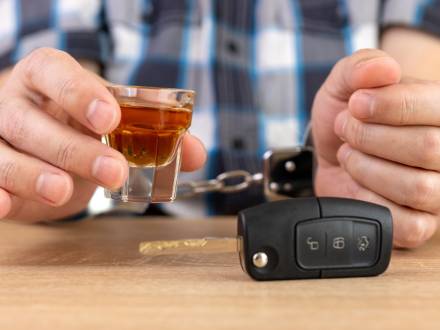
A second Illinois DUI does not always require jail. A third DUI is a felony, but some drivers can qualify for probation. If your blood alcohol concentration (BAC) was 0.16 or higher during the third offense, the law requires at least 90 days in jail. If you face repeat DUI charges in 2026, a Lake County, IL DUI defense lawyer can review your record and explain the penalties.
Does a Second DUI in Illinois Require Jail or Community Service?
Under 625 ILCS 5/11-501, a second DUI is ordinarily a Class A misdemeanor. It carries up to 364 days in jail and a fine of up to $2,500. The mandatory minimum is five days of imprisonment or 240 hours of community service. The court cannot suspend or reduce that required punishment.
If your BAC was 0.16 or higher during a second DUI, the penalties include at least two additional days in jail and a fine of at least $1,250. A second DUI with a passenger under 16 is aggravated DUI, a Class 2 felony.
Court supervision allows eligible drivers to avoid a criminal conviction by completing court-ordered requirements, such as alcohol education or community service. Under 730 ILCS 5/5-6-1, DUI supervision is available only once in a lifetime. Drivers with a previous DUI conviction or DUI supervision are not eligible. Even though supervision avoids a conviction, it still counts as a prior offense for future DUI charges.
Is a Third DUI in Illinois Always a Felony With Mandatory Jail Time?
A third qualifying DUI is aggravated DUI, a Class 2 felony. If prison is imposed, the usual range is three to seven years. But probation remains possible in qualifying cases. If your BAC was 0.16 or higher during a third DUI, the law requires at least 90 days in jail and a fine of at least $2,500.
If the court grants probation or conditional discharge for aggravated DUI, the sentence must include at least 10 days in jail or 480 hours of community service. A child passenger can add penalties.
How Does Illinois Count Previous DUIs When Filing New Charges?
Illinois counts qualifying prior DUI violations, not just past convictions. A first DUI resolved through court supervision can still count toward making a later offense a third DUI. Qualifying offenses from other states or local ordinances can count too.
There is no standard lookback limit for the felony enhancement. Even a decades-old DUI can affect the current charge. The State must prove each prior case qualifies.
An attorney can check certified records and prior case outcomes, rather than relying only on a driving abstract. Prior administrative license suspensions alone do not count as prior DUI offenses.
How Long Will Illinois Revoke Your License for a Second or Third DUI?
License revocation is different from a temporary suspension. Revocation ends driving privileges until the Secretary of State authorizes their return.
If you’re convicted of a second DUI and the two offenses happened within 20 years of each other, your license will be revoked for at least five years. A third conviction brings at least 10 years, and a fourth brings lifetime revocation. If the offenses happened more than 20 years apart, the five-year minimum does not apply.
What Other Consequences Follow Repeat DUI Convictions in Illinois?
The consequences extend beyond jail and fines, including:
-
Alcohol and drug evaluation, with education or treatment requirements
-
Higher insurance costs and limits on employment opportunities
-
Restrictions on driving and possible ignition interlock requirements
-
Problems for commercial drivers and licensed professionals
-
A lasting DUI record that ordinarily cannot be expunged or sealed
Under 20 ILCS 2630/5.2, DUI convictions and supervision cannot ordinarily be sealed or expunged.
How Can a Lake County DUI Lawyer Challenge Second or Third DUI Charges?
Mandatory penalties apply only when the State proves an offense that triggers them. The defense can review whether police had a lawful reason to stop the vehicle and probable cause to arrest the driver.
Breath or blood testing records, roadside tests, and police video can reveal problems. However, errors do not guarantee dismissal.
A lawyer can also challenge the use of earlier cases, including whether an out-of-state offense qualifies. An incorrect prior-offense count can change the charge and sentence.
Schedule a Free Consultation With Our Waukegan, IL DUI Defense Attorney
Attorney Gebhardt has more than 20 years of experience and formerly prosecuted cases for the Cook County State's Attorney's Office. He reviews evidence and prior records in repeat DUI cases.
If you face a second or third DUI charge in 2026, early review can help identify sentencing risks and defense options. Contact The Law Offices of Matthew R. Gebhardt, P.C. at 847-239-4703 to speak with our Lake County, IL DUI defense lawyer today.
Buffalo Grove Office
Buffalo Grove, IL 60089



The Law Offices of Matthew R. Gebhardt, P.C. represents clients throughout Lake County, Illinois including but not limited to Antioch, Arlington Heights, Barrington, Buffalo Grove, Deerfield, Grayslake, Gurnee, Highland Park, Lake Bluff, Lake Forest, Lake Villa, Lake Zurich, Libertyville, Lincolnshire, Mundelein, North Chicago, Northbrook, Palatine, Rolling Meadows, Round Lake, Skokie, Vernon Hills, Waukegan, Wauconda, and Zion.
Results listed are not a guarantee or indication of future case results.
